

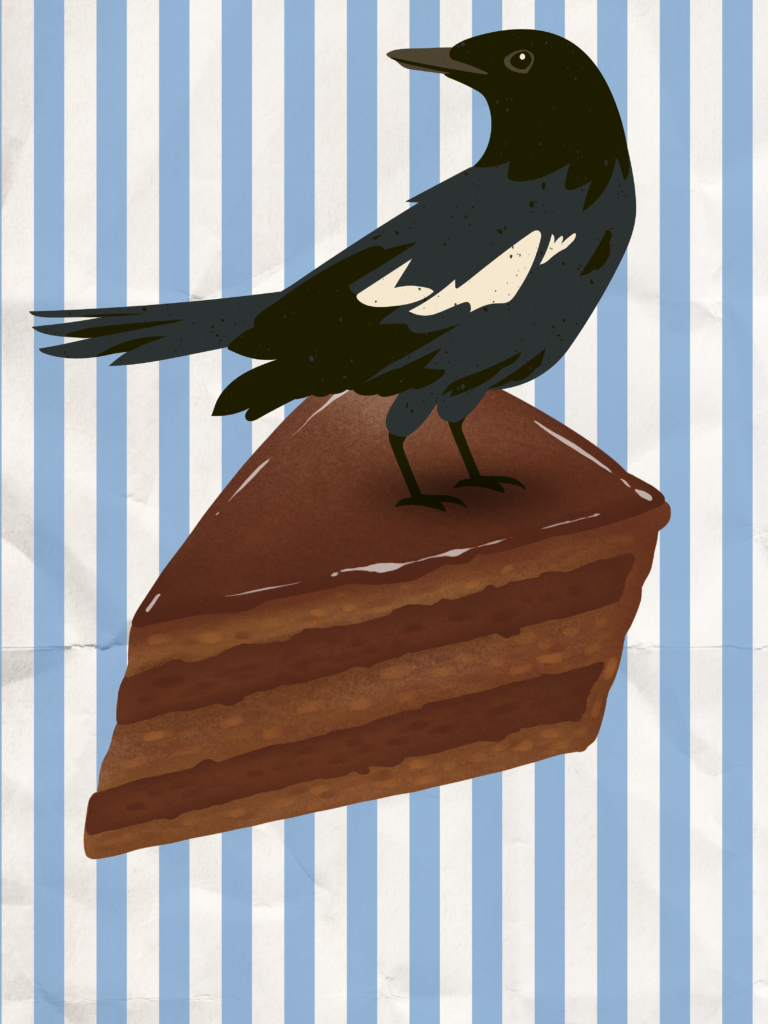
As an adult learner, it’s common to develop a persistent feeling of rising pressure; the strong compulsion to make up for lost time, a desperation to catch up to some platonic ideal of where you imagine you should be. As is typical with dedicated students, this unhappiness stems from something useful: abundant motivation. It’s tricky (and in this instance, not important) to parse out whether this is a byproduct of intrinsic or extrinsic forces, but regardless of its genesis, it plays into a pattern that creates misery, dread, and disappointment across the spectrum of well intentioned adult learners. I call it magpie mentality.
I’ve touched on this here and there, but I thought it would be of some value to poke around a little bit more and offer concrete advice for advancing players who see themselves in the following paragraphs.
Magpies famously collect shiny things. As it turns out, studies suggest it is humans who prefer shiny things, so we notice magpies more when they’re collecting the stuff we’re drawn to. Turning to our experience as musicians, the repertoire is bursting with an overwhelming array of glittering objects. The feeling of urgency combined with the excitement and stimulation of a new piece can create a cycle that results in a transient, brittle sort of knowledge. The notes on the page become loosely familiar, but not really known. Mistakes feel endemic. Someplace deep in the mind echoes with the refrain “well, I guess this is as good as I’m going to get, on to the next thing”. You think you’re being cool headed, rational, even a little forgiving of yourself. The good news is the bad news: you have much more available, I assure you. All you have to do is pick a jewel—any jewel—and polish away by spending high quality time examining it (which is different from repeating it). What happens at the end of this process is the real miracle: you will have a shiny object, and you will be a shiny object. We are not learning “the repertoire”. You are learning how to play the instrument. The repertoire, until you have all of your technique and artistry settled, is used to hone YOU. Mastery is possible, but you have to experience it to cultivate a sense for the way it changes your relationship to the instrument. You will know when you’ve achieved it by the way the thing feel obvious; unassailable.

In-depth learning is a bit like heat or pressure treating. In order for the substance being treated to end up strong and resilient, it is exposed, in a controlled manner, to forces that normally cause weakness. If you’re more culinary minded, think about tempering chocolate. It has to go through some specific changes for the molecular structure to break and re-form, resulting in the glossy finish all Great British Bake Off fans take such satisfaction in. I’m not the only pedagogue who bangs on and on that subjecting yourself to the adversity of any given piece until it’s extinguished is the only path towards true competence. It’s my favorite part of The Talent Code, and one of the ideas that has stood the test of time…whereas much early aughts pop science has evinced our carelessness when correlation wears causation’s battle armor. Yes, this is an Achilles/Patroclus reference.
I’ve spent the last twenty-odd years saying it: it’s not that you have to shift. It’s not even that you have to shift to the right notes over the correct distance. It is the quality of each aspect of the movement and how you conceptualize it that are the essence of building resilient skill week over week, month over month, year after year.
Technical work is almost always the stuff students resist. Qualitative technical work seems even less sexy to the uninitiated. What’s funny is the way resistant folks have a Damascene conversion after surrendering to the disciplined study where technique and the factual aspects of a work are prioritized. Examples of the “facts” of a piece include:
- the rhythm (I suggest you learn this first)
- the intervals between notes
- what the accompaniment, if any, sounds like
- fingerings, settled
- bowings, settled
- mapping out shifts via guide or old finger shifts regardless of whether they are what the final product will employ
- which techniques will be used, every single note
- extension? finger replacement?
- which note is the physical anchor of a triple stop?
- detaché? spiccato? louré? …please stop using louré so much, though; it sounds like playing into a fan
New acolytes go from “forgetting” to look at Popper to asking to remain on one for an additional week. It’s a joy for me every time, especially because I was resistant to these things too, and revel in the dividends making the change in my approach all those years ago resulted in. Nothing in the repertoire feels out of my reach, with time. Although I feel a sort of quiet happiness and calm when I practice, reading that back and knowing it is true creates as encompassing ecstatic feeling of wholeness and possibility that is my most desperate wish for you.
If you took the internet and shook loose every post from every genuinely pained, earnest adult string student demolished by a nemesis passage, the vast majority of them would be solved with this approach. But, as an instructor who was an occasionally recalcitrant student, I know you must meet people where they are, and that sometimes chiding with the solution makes things worse. If you’re still here and are reading this, I suspect you’re either already on board or ready to try something new.

Next time you sit down to do the work, if you’re not brimming with a sense of possibility on the way to mastery, allow 10 minutes or so to take a tricky section down to the studs, as if today was day one. Establish what facts you know, and what you don’t know. Can you hear the notes in your head? Is the rhythm obvious? What has your instructor suggested as a remedy? What is the underlying competence this remedy proposes to bolster? Can you navigate to every note from the one that comes before it? Can you play any note grouping on the page from any part of the measure that contains it or do you need a running start, many notes or measures hence? If you need to start somewhere else, can you see how this creates a house of cards?
Answer these questions, devote real time to them, and set the magpie free. Hugs.

This post took 4 hours and multiple paid subscriptions to create.