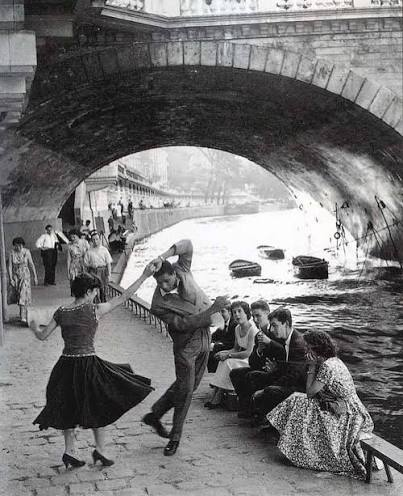
If you squint, you can see the end of summer on the horizon, and for many of you, the return to a more regular lesson schedule with your instructor. One of the big goals I have in life is to improve my readers’ experience as musicians, to offer a sense of possibility and belonging. Today’s post is a prescription compounded for anyone who has anxiety surrounding lessons, feels their lessons are more performance than class, or worries they are letting their teacher down by not making enough progress. As you read, enjoy a sampling of vintage photos from summers past, just like you should enjoy your meetings with your instructor.

I have been very lucky the last 10 or so years to have extremely engaged and ambitious students—I haven’t had to chide anyone to practice in ages, and more often than not, I have to counsel them to slow down to avoid injury, burnout, and the weird myopia that accompanies passion for a subject.

Another common feature that comes part and parcel with the high standards my students share is their persistent sense that, no matter what they’ve done to prepare for our lesson, they have not done enough; that their work should be more evident.
Of course, to me, it is evident. Playing “worse” is subjective, strange as that sounds. Here’s the short version:
- Many of the changes your instructor asks for are a trade: doing this instead of that, because that was causing an issue that would develop into an insurmountable problem. So, from your perspective you’re treading water. One mediocrity in place of another. To a more discerning eye, you’ve swapped something that will end in flames for something that leads to the summit. Trust that your teacher has the long view in mind.
- Incremental change is hard to measure when you’re inside of the process. Think about weight gain or loss, medications that need time to work, growing a plant from a seed. Someone who sees you less frequently notices the changes much easier. Trust that your teacher is capable of perceiving this stuff, and that you are not the lone exception to the rule.
- You know what’s worse than regressing week over week? Bringing shame into the equation. Not only is it just really hard to witness someone we care about absolutely demolishing themself with shame, worry, and feelings of inadequacy, but all of that stuff acts as insulation against the vulnerability necessary to learn! So it gets you coming and going: it feels awful and then you actually sort of fulfill the worst part of your fears—not actually internalizing the new information. Although I’m not an “easy” teacher, I’m not someone who is imperious or punitive. I pride myself on being serious about music but generous of spirit with the people I teach. And even still, I have a handful of students who tell me lessons feel like something they have to survive. I’m grateful for their candor, and we’ll keep working on it. But all I can say is that the people who worry they are not obviously holding themselves accountable for progress are never the ones who have that issue to begin with.

The last thing I’ll leave you with is the other side of the coin, although it’s still not worth cultivating guilt, shame, or nerves about. Practice what your instructor has suggested, how they have suggested. If I ever feel frustration (which is still information about me, that is my job to own and manage, not the student!) it is with the student who makes the same mistake every week, improves during the lesson after the meticulous crafting of a solution, and then does not alter their practice to incorporate the solution. You can work for YEARS and make only lateral progress—encountering new repertoire and gaining experience but carry the same deficiencies in technique and approach no matter what you play—by failing to be responsible for the changes implemented during your lessons. The most egregious of these habits is doing whatever you’re doing too quickly. Too quickly for your skill to show up, too quickly to notice what you’re doing, too quickly to breathe. A close second is mistaking playing for practice. Playing is just fine, but don’t ever assume that just because you’re making sounds that you’re doing anything other than, well, making sounds. Returning to the initial description that this is a medicinal post, a prescription for the tender hearted and anxious students out there: I want you to remember that your lessons are not placebos. There are no secrets to mastery in music. The information is right in front of you, in every assignment, every correction, being demonstrated every time your instructor plays or says “That’s it! You’re doing it!”
New to music? Got a question? Want to try a lesson? Drop me a line! contact at emily wright dot net.